How Long Does Perfume Last? The Complete Guide to Fragrance Longevity
If you've ever spritzed a beautiful fragrance in the morning only to find it completely vanished by lunch, you're not imagining things. Fragrance longevity — how long perfume lasts on your skin — is one of the most misunderstood aspects of the perfume world, and one of the most important.
The answer to "how long does perfume last?" is never simple. It depends on concentration, ingredients, your skin chemistry, how you apply it, and even the weather. But once you understand what drives longevity, you can make smarter choices — and get significantly more from every bottle you own.
This guide breaks down everything you need to know.
Understanding Perfume Concentrations
The single biggest factor in how long your fragrance lasts is its concentration — the ratio of aromatic compounds to alcohol and water in the formula. Here's the hierarchy:
Eau Fraîche (1–3% concentration)
The lightest option. Lasts roughly 1–2 hours. Think of it as a whisper — pleasant but fleeting. You'll find this concentration in body mists and some designer splash colognes.
Eau de Cologne (2–4% concentration)
Slightly stronger than eau fraîche, lasting 2–3 hours. Traditionally citrus-forward and refreshing, but not built for endurance.
Eau de Toilette (5–15% concentration)
The mainstream standard. Most high-street fragrances sit here. Expect 3–5 hours of wear. Good for casual daytime use, but you'll likely need to reapply by mid-afternoon.
Eau de Parfum (15–20% concentration)
This is where serious fragrance begins. Eau de parfum typically lasts 6–8 hours, sometimes longer depending on the notes. It strikes the ideal balance between projection, longevity, and wearability. At Potion Paris, our Collection Étoilée is formulated at eau de parfum concentration — because we believe luxury fragrance should stay with you, not disappear before your day truly begins.
Parfum / Extrait de Parfum (20–40% concentration)
The most concentrated form. Can last 8–12+ hours and often sits closer to the skin with less projection but extraordinary depth. Extraits are typically the most expensive format.
The Role of Fragrance Notes in Longevity
Not all ingredients behave the same way on skin. Perfumers classify notes by their evaporation rate:
Top notes — the first thing you smell. Citrus, light fruits, and green accords fall here. They're bright and immediate but evaporate within 15–30 minutes. This is why a fragrance smells different in the shop than it does two hours later.
Heart notes — the character of the fragrance. Florals, spices, and softer woods emerge after the top notes fade. They typically last 2–4 hours and form the emotional core of the scent.
Base notes — the foundation. Oud, amber, musk, sandalwood, vanilla, and resins anchor the fragrance and can linger for 8–12 hours or more. This is why oriental and woody fragrances consistently outperform fresh, citrus-based ones in longevity tests.
If lasting power is a priority, look for fragrances built on rich base notes. Enchanted Oud from Potion Paris, for example, combines oud with warm amber and delicate rose — a structure designed for depth and extraordinary staying power. Similarly, Noir de Marrakesh layers dark spice over a resinous base that develops beautifully over hours.
Why Perfume Lasts Differently on Different People
You've probably noticed that the same fragrance can smell completely different — and last a completely different amount of time — on two people. This isn't a myth. Several factors are at play:
Skin type matters enormously. Oily skin holds fragrance longer because the natural oils slow evaporation. Dry skin, conversely, tends to burn through fragrance faster. If your skin runs dry, applying a fragrance-free moisturiser before spraying can make a remarkable difference.
Body temperature and pH. Warmer skin amplifies projection but can accelerate evaporation of lighter notes. Your skin's natural pH also interacts with fragrance molecules, which is why certain scents smell slightly different on you than on someone else.
Diet and medication. What you eat, drink, and any medication you take can subtly alter your body chemistry. It's a minor factor compared to skin type, but it exists.
Climate and humidity. Heat intensifies fragrance but shortens its lifespan. Humidity actually helps fragrance cling to skin. Cold, dry air is the enemy of longevity — which is why you might notice your perfume fading faster in winter despite wearing heavier scents.
How to Make Your Perfume Last Longer
Once you understand the science, there are practical steps to maximise wear time:
1. Moisturise before you spray. Apply an unscented moisturiser or body oil to pulse points before your fragrance. Hydrated skin holds scent molecules far more effectively than bare, dry skin.
2. Target your pulse points — but don't rub. Wrists, neck, behind the ears, inner elbows, and behind the knees. These warm areas help diffuse the fragrance. But never rub your wrists together — friction breaks down the top notes and alters the scent profile.
3. Spray onto clothing (carefully). Fabric holds fragrance significantly longer than skin — sometimes for days. However, some ingredients can stain lighter fabrics. Test on an inconspicuous area first. Wool, cashmere, and scarves are particularly good at holding scent.
4. Layer strategically. Using matching body products (shower gel, body cream) from the same scent family creates a layered foundation that extends longevity. For a deeper dive into this technique, our guide on how to layer fragrances covers everything you need to know.
5. Store your perfume properly. Heat, light, and humidity degrade fragrance over time. Keep bottles in a cool, dark place — a bedroom drawer rather than a bathroom shelf. The Crystal Vial by Potion Paris is designed with this in mind: its refillable format means the precious liquid stays protected, and you never waste a drop.
6. Don't over-apply; reapply instead. Two to three sprays in the right places is usually sufficient. Carry a travel-sized option — like the Potion Pendant — for discreet, elegant reapplication throughout the day.
How Long Does Perfume Last in the Bottle?
This is a separate but equally important question. Unopened, most perfumes remain stable for 3–5 years. Once opened, exposure to air begins a slow oxidation process. You'll typically get 1–3 years of optimal performance from an opened bottle, depending on storage conditions.
Signs your perfume has turned:
- The colour has darkened significantly
- The scent has become sharp, acidic, or flat
- The top notes smell "off" or chemical
Proper storage dramatically extends shelf life. And choosing a refillable perfume system means you're buying smaller quantities more frequently, ensuring every application is from a fresh batch rather than a half-empty bottle that's been sitting for years.
Which Fragrance Families Last Longest?
As a general rule:
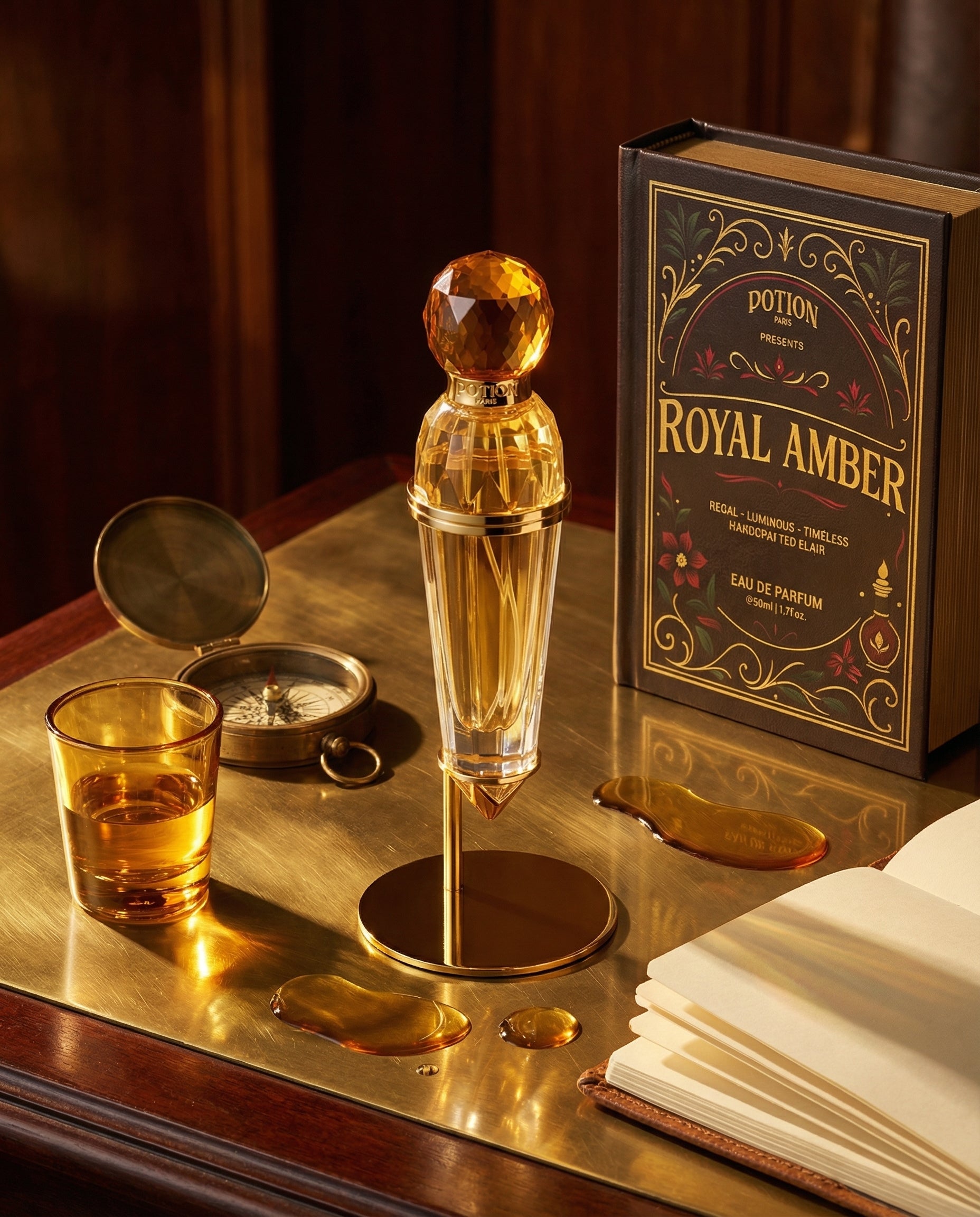
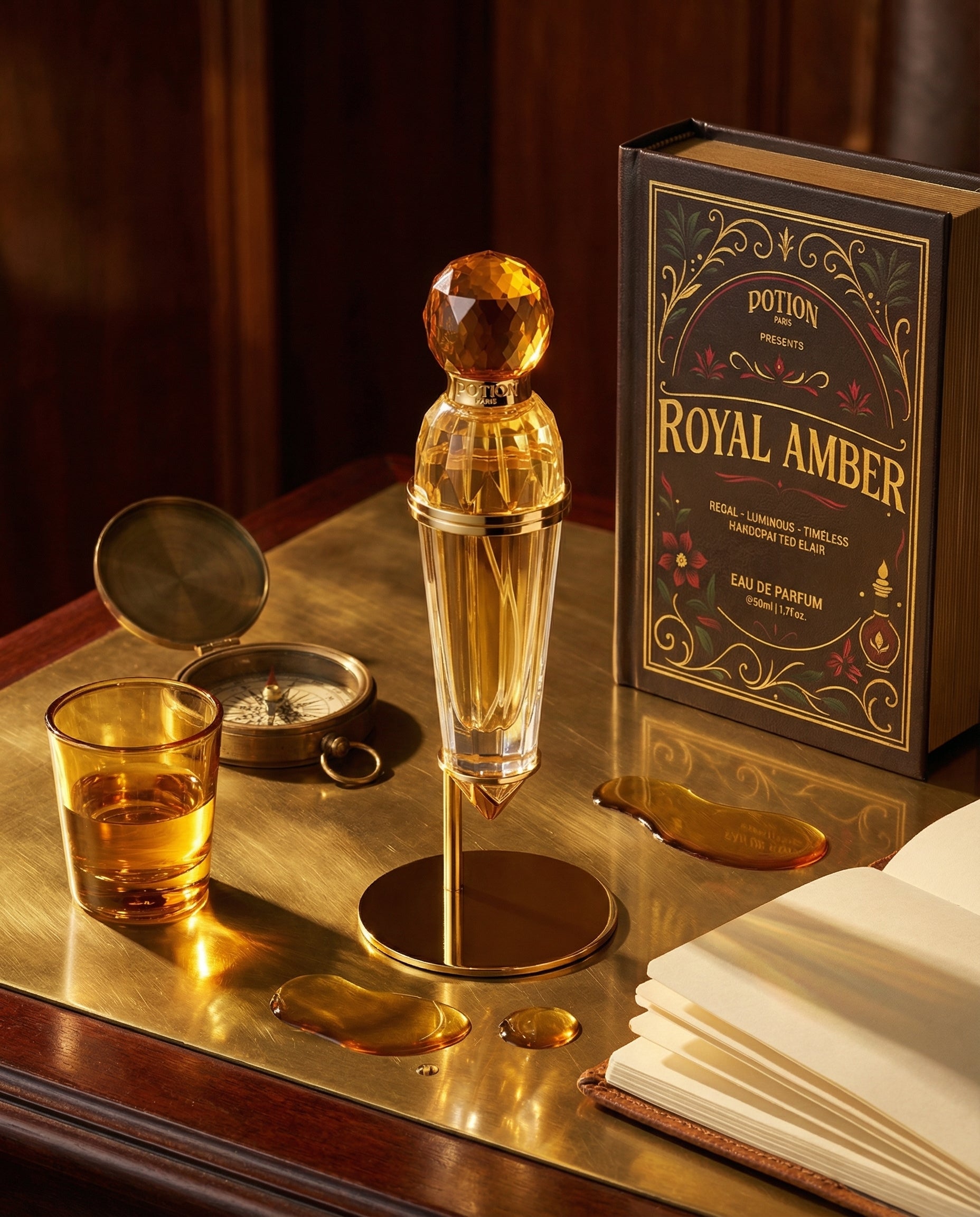
- Oriental / Amber — 8–12+ hours. Heavy base notes, resins, and musks provide exceptional staying power. Royal Amber exemplifies this — warm, enveloping, and built to endure.
- Woody / Oud — 7–10+ hours. Dense molecular structures cling to skin beautifully.
- Floral — 4–8 hours. Varies widely depending on whether the florals are supported by heavier bases.
- Fresh / Citrus — 2–4 hours. The most volatile notes evaporate quickest. Lovely for immediate impact, less so for endurance.
- Aquatic / Green — 2–5 hours. Light and airy by design, which inherently limits longevity.
Frequently Asked Questions
Does expensive perfume last longer than cheap perfume?
Not automatically, but there's a strong correlation. Premium fragrances typically use higher-quality raw materials — natural oud, real rose absolute, genuine ambergris — which tend to have better tenacity than synthetic replacements. They're also more likely to be formulated at higher concentrations (eau de parfum or extrait). That said, concentration and note structure matter more than price alone. A well-constructed eau de parfum at £120 can outperform a poorly formulated extrait at £300.
How can I test how long a perfume lasts before buying?
The best method is to spray on skin (not a paper strip) and check at intervals throughout the day — at 1 hour, 4 hours, and 8 hours. Paper strips dry out quickly and don't interact with your body chemistry. Most reputable fragrance houses offer discovery sets or samples specifically for this purpose. At Potion Paris, the Discovery Set lets you test across the full collection on your own skin, at your own pace.
Is it normal for perfume to smell different after a few hours?
Absolutely — and it's intentional. Perfumers design fragrances to evolve over time through the top, heart, and base note structure. The opening burst of a fragrance (the first 15–30 minutes) is deliberately different from its dry-down (the scent after several hours). Many fragrance enthusiasts actually prefer the dry-down to the opening. This evolution is a hallmark of well-crafted perfumery and one of the joys of wearing quality fragrance.
Final Thoughts
How long perfume lasts is never a single number — it's an interplay of concentration, ingredients, skin chemistry, application technique, and environment. But armed with the right knowledge, you can choose fragrances that genuinely work with your lifestyle and make them perform at their best.
The most important takeaway: invest in quality, apply with intention, and store with care. A beautifully crafted eau de parfum, applied correctly, should carry you from morning through evening — exactly as its perfumer intended.
Explore the full Potion Paris collection to discover fragrances built for depth, longevity, and unforgettable presence.