
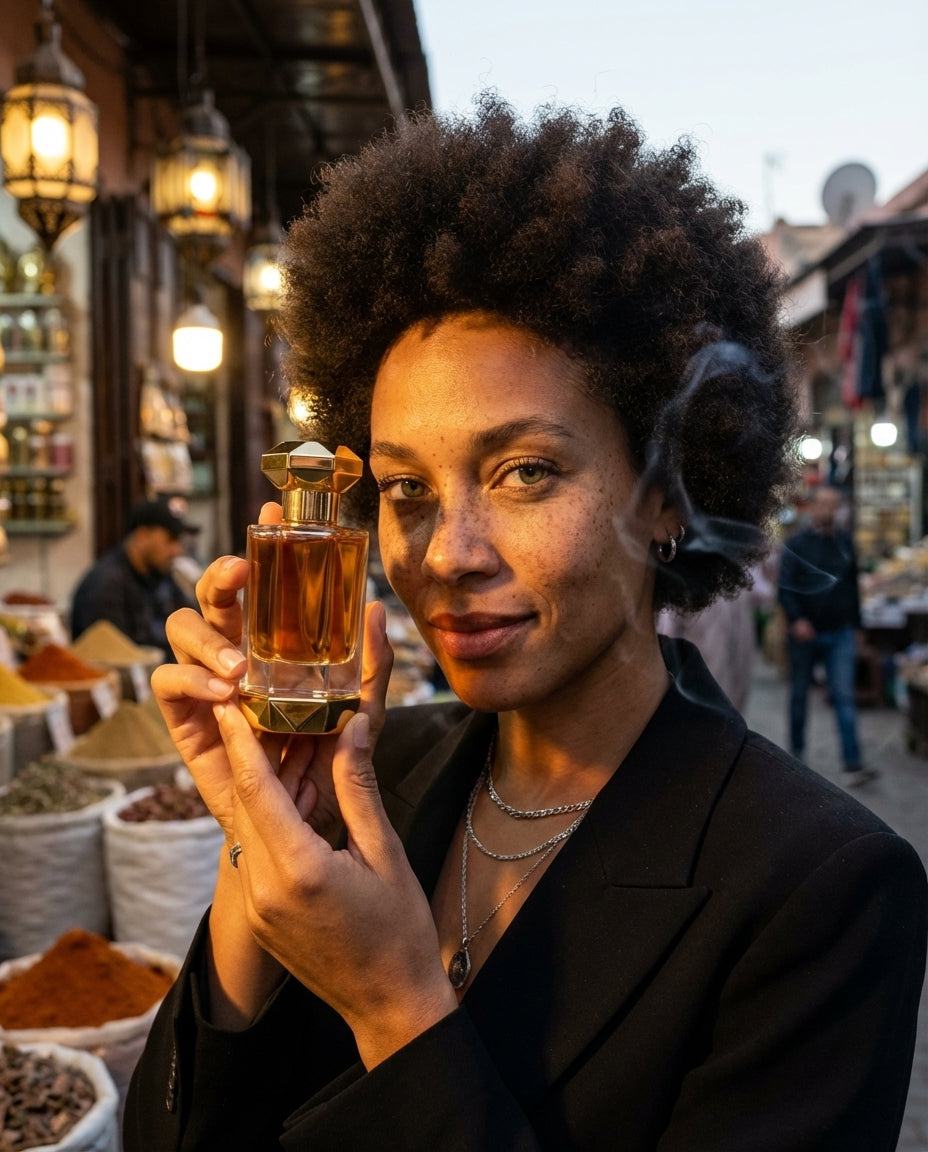
Natural Ingredients in Luxury Perfume: Why What Goes Into Your Fragrance Matters More Than You Think
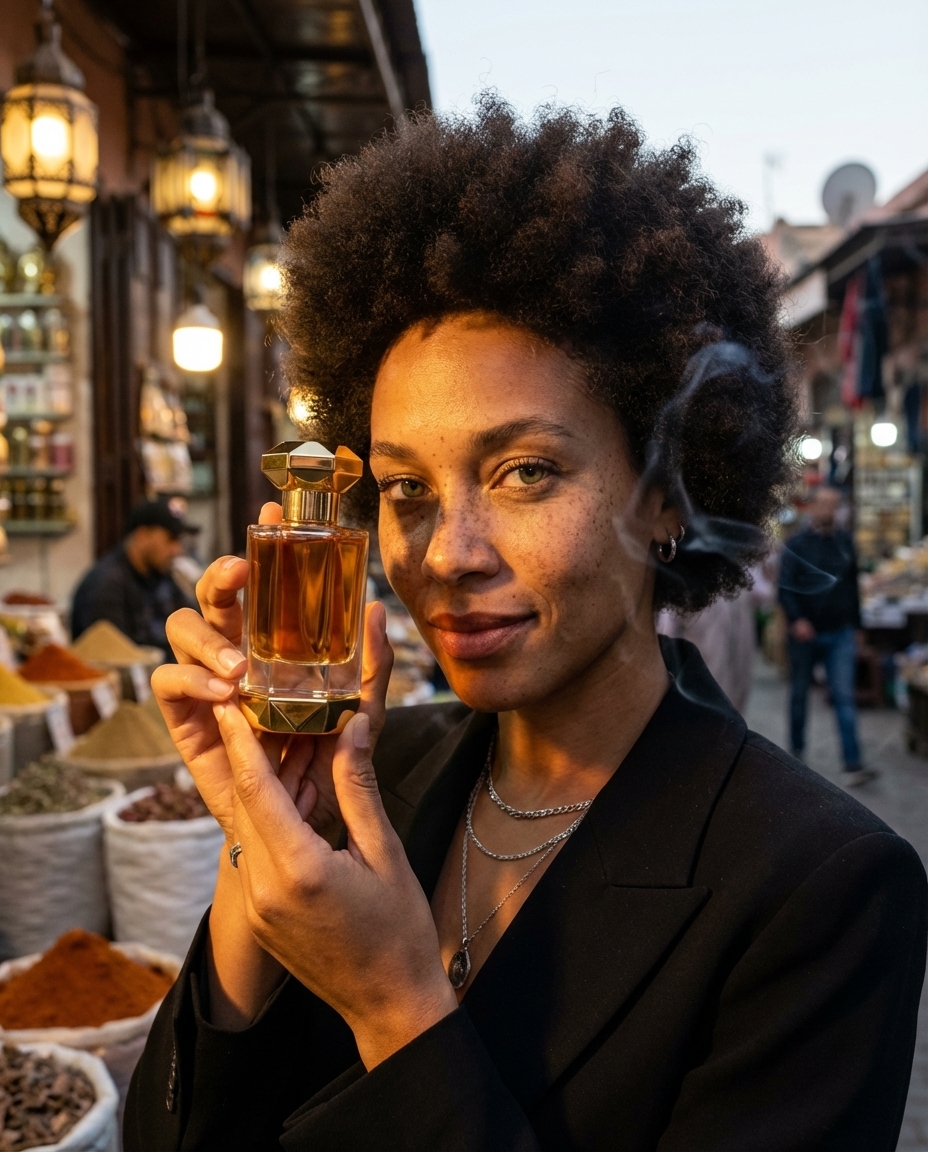
When you hold a bottle of luxury perfume to the light, you're not simply looking at scented liquid. You're looking at years of cultivation, harvest, and extraction — a concentration of the natural world distilled into something almost impossibly beautiful.
Yet in an industry increasingly dominated by synthetic shortcuts, the distinction between a fragrance built on natural ingredients and one assembled from laboratory compounds has never been more significant. Understanding what goes into your perfume isn't merely an exercise in curiosity. It's the difference between wearing something that evolves on your skin like a living thing and wearing something that sits flat, unchanging, until it fades.
This is a guide to natural ingredients in luxury perfume — what they are, why they matter, and how to recognise when a house is genuinely committed to them.
What Are Natural Ingredients in Perfume?
Natural ingredients are materials derived directly from nature: flowers, woods, resins, spices, fruits, and animal-derived substances (though ethical modern perfumery has largely moved away from the latter). They are obtained through methods such as steam distillation, cold pressing, enfleurage, and CO2 extraction.
The critical distinction is this: a natural ingredient carries the full molecular complexity of its source. A rose absolute contains over 300 individual chemical compounds. A synthetic rose accord might contain five or six. This complexity is what gives natural perfumery its depth, its ability to shift and breathe on the skin, and its capacity to smell subtly different on every person who wears it.
Common natural ingredients in luxury perfume include:
- Essential oils — concentrated plant extracts obtained through distillation (lavender, vetiver, patchouli)
- Absolutes — highly concentrated extracts using solvent extraction (rose absolute, jasmine absolute, tuberose)
- Resins — aromatic substances from tree bark and sap (frankincense, myrrh, benzoin, labdanum)
- Natural musks and ambers — plant-derived alternatives to animal musks (ambrette seed, labdanum amber)
- Precious woods — sustainably sourced heartwoods (oud, sandalwood, cedarwood)
- Spices — dried botanical aromatics (cardamom, saffron, black pepper, cinnamon)
- Citrus oils — cold-pressed from fruit peel (bergamot, neroli, blood orange)
Why Natural Ingredients Transform a Fragrance
Complexity You Cannot Replicate
A single natural ingredient contains hundreds of molecular compounds working in concert. This creates what perfumers call "roundness" — a fragrance that doesn't announce itself with a single note but unfolds gradually, revealing different facets over hours.
When you spray a perfume rich in natural ingredients, the opening might feel bright and sparkling, the heart warm and intimate, the dry-down deep and contemplative. This evolution isn't accidental. It's the natural consequence of complex molecular structures interacting with your skin's chemistry, temperature, and pH.
Synthetic ingredients, by contrast, tend to be molecularly simple. They're precise — which is useful — but they lack the harmonic overtones that give natural fragrances their emotional depth.
Skin Chemistry Interaction
Natural ingredients respond to your individual skin chemistry in ways synthetics rarely do. This is why a truly natural fragrance smells slightly different on every person — it becomes genuinely yours. The warmth of your skin, the oils you produce, even your diet can influence how natural notes express themselves.
This is also why sampling matters enormously in luxury perfumery. A fragrance built on natural materials cannot be fully understood from a paper strip. It needs time on skin to reveal itself.
Emotional Resonance
There's growing scientific evidence that natural aromatic compounds interact with our limbic system — the brain's emotional centre — differently than synthetic ones. Natural scents carry evolutionary familiarity. The smell of real rose, genuine oud, actual vanilla — these aren't just pleasant. They trigger deeper emotional responses because our biology recognises them.
This is why a luxury perfume built on natural ingredients can feel genuinely comforting, genuinely uplifting, genuinely intoxicating in ways that even the most technically impressive synthetic fragrance struggles to match.
The Most Prized Natural Ingredients in Perfumery
Oud (Agarwood)
Perhaps the most celebrated natural ingredient in modern luxury perfumery, oud is a resin produced when Aquilaria trees become infected with a specific mould. The resulting heartwood is extraordinarily rare — fewer than 2% of wild Aquilaria trees produce it — and its scent is unlike anything else in nature: deep, complex, animalic, and profoundly beautiful.
Genuine oud oil can cost more than gold by weight. It's the cornerstone of Middle Eastern perfumery and has become one of the most sought-after notes in Western luxury fragrance. At its best, oud brings a living warmth to a fragrance that synthetic oud alternatives — however well-constructed — simply cannot replicate.
Rose
The queen of perfumery ingredients. Rose absolute and rose otto (steam-distilled) remain among the most expensive natural materials in the world. It takes approximately 10,000 roses to produce a single 5ml bottle of rose essential oil.
The two most prized varieties are Rosa damascena (Damask rose, primarily from Turkey and Bulgaria) and Rosa centifolia (May rose, from Grasse, France). Each carries distinct characteristics — Damask rose is richer and more honeyed, while May rose is greener and more delicate.
A luxury rose perfume built on genuine rose absolute has a depth and dimensionality that synthetic rose — however sophisticated — tends to lack.
Sandalwood
Once sourced almost exclusively from Mysore, India, premium sandalwood is now cultivated sustainably in Australia and New Caledonia. Its scent is creamy, warm, and gently woody — a natural fixative that helps other ingredients last longer on skin.
Quality sandalwood takes decades to mature, which is why genuine sandalwood oil commands premium prices. It's one of the few natural ingredients that actually improves with age, both in the tree and in the bottle.
Jasmine
Jasmine absolute is the second most expensive flower oil in perfumery, after rose. The flowers must be picked at night when their oil content peaks, and it requires approximately 8,000 blossoms to produce a single gram of absolute.
Jasmine brings an intoxicating, almost narcotic richness to fragrance — warm, sweet, and slightly animalic. It's the ingredient that gives many classic perfumes their seductive quality.
Frankincense
Harvested from Boswellia trees in Oman, Somalia, and Ethiopia, frankincense resin has been traded for over 5,000 years. Its scent is luminous, slightly citrusy, and deeply spiritual — there's a reason it has been burned in places of worship across cultures for millennia.
In modern perfumery, frankincense provides a clean, ethereal quality that lifts and brightens heavier ingredients. It's particularly prized in luxury oriental and woody compositions.
Amber and Labdanum
True amber in perfumery typically refers to labdanum — a resin harvested from the Cistus shrub in Mediterranean regions. It provides a warm, sweet, slightly balsamic quality that forms the backbone of many amber-focused fragrances.
Labdanum was historically harvested by combing it from the beards of goats that grazed among Cistus bushes. Today's methods are more refined, but the resulting resin retains that ancient, enveloping warmth that makes amber accords so universally appealing.
Natural vs Synthetic: The Honest Picture
It would be disingenuous to suggest that natural ingredients are inherently "better" than synthetic ones in every respect. Modern perfumery relies on a carefully judged balance of both, and many synthetic molecules — Iso E Super, ambroxan, certain musks — have earned their place in the perfumer's palette.
However, the ratio matters enormously. A fragrance that leads with natural ingredients and uses synthetics judiciously for stability and projection is fundamentally different from one that uses a primarily synthetic base with a token gesture towards natural materials.
The difference is perceptible:
- Projection — Natural fragrances tend to sit closer to the skin, creating a personal scent aura rather than filling an entire room
- Evolution — Natural fragrances develop and change over hours; synthetics tend to remain static
- Longevity — Contrary to popular belief, many natural ingredients (oud, sandalwood, labdanum) have exceptional lasting power
- Individuality — Natural fragrances interact with your unique chemistry; synthetics smell largely the same on everyone
How to Identify Quality Natural Ingredients
Read Beyond the Marketing
Words like "natural" and "botanical" are largely unregulated in the fragrance industry. A perfume can be marketed as "natural" whilst containing predominantly synthetic ingredients. Look instead for specific details: named sources (Bulgarian rose, Mysore sandalwood, Laotian oud), extraction methods mentioned, and transparency about ingredient provenance.
Trust Your Nose
Natural fragrances have a particular quality that's difficult to describe but unmistakable once you know it. They feel "round" rather than "sharp." They shift and change rather than remaining static. They smell complex even in their simplest moments.
Research the House
Brands genuinely committed to natural ingredients tend to talk about their supply chains, their relationships with growers, and the specific challenges of working with natural materials. They'll acknowledge that natural ingredients create batch variation — that this year's harvest might differ subtly from last year's — and frame this as a feature, not a flaw.
Price as Indicator
Natural ingredients are expensive. There's no escaping this reality. A luxury perfume built on genuine natural materials will cost more than one built primarily on synthetics. When a fragrance is suspiciously inexpensive for its claimed ingredients, that's worth questioning.
The Future of Natural Ingredients in Perfumery
The conversation around natural ingredients is evolving rapidly. Sustainability concerns have prompted the industry to develop new approaches:
- Biotechnology — Laboratory cultivation of natural molecules using fermentation (producing genuine oud compounds without felling trees)
- Sustainable harvesting — Certified supply chains ensuring natural materials are sourced responsibly
- Upcycling — Extracting aromatic compounds from agricultural waste products
- Refillable formats — Reducing packaging waste whilst preserving the integrity of natural formulations. The Crystal Vial concept, for instance, allows you to refill a beautifully crafted vessel rather than discarding and replacing an entire bottle
These innovations mean the future of natural perfumery isn't about choosing between quality and responsibility. It's about achieving both.
Frequently Asked Questions
Are natural perfumes safer than synthetic ones?
Not necessarily in terms of skin safety — both natural and synthetic ingredients can cause sensitivities, and both are subject to IFRA safety regulations. However, natural ingredients have a longer history of human use, and many people find they tolerate natural fragrances better. The real advantage of natural ingredients is in scent quality, complexity, and the way they interact with your individual skin chemistry.
Why are perfumes with natural ingredients more expensive?
The economics are straightforward: natural ingredients are genuinely costly to produce. Rose absolute requires thousands of hand-picked flowers. Oud is rarer than gold. Jasmine must be harvested at night during a narrow blooming window. These are agricultural products subject to weather, season, and geography — not factory outputs that can be scaled infinitely. The price reflects real material value, not simply marketing positioning.
Can you tell if a perfume uses natural ingredients just by smelling it?
With practice, yes. Natural fragrances tend to evolve more noticeably on skin over time, revealing different facets as they develop. They often feel "rounder" and more three-dimensional than predominantly synthetic compositions. The dry-down is typically warmer and more skin-like. However, modern synthetic chemistry has become remarkably sophisticated, so the most reliable indicator is the house's transparency about their ingredients and sourcing.
The world's finest fragrances have always begun with the finest materials. Explore our collection — crafted with the natural ingredients that give perfume its soul.