Winter Fragrance Guide: The Definitive Edit of Cold-Weather Scents Worth Wearing
Why Winter Changes Everything About How Fragrance Performs
There is a particular kind of magic that happens when cold air meets warm skin and a well-chosen fragrance sits between the two. Winter does not merely change what perfume you should wear — it fundamentally transforms how perfume behaves.
In warmer months, fragrance molecules move quickly. Heat accelerates evaporation, projects scent outward, and can make rich compositions feel overwhelming. Winter reverses the physics entirely. Cold air slows volatility, keeps fragrance closer to the skin, and rewards depth, warmth, and complexity in ways that lighter compositions simply cannot deliver.
This is why the perfumes that feel perfect in July can seem to vanish by November. And why fragrances that might feel suffocating in summer become magnificent, intimate, and deeply personal when the temperature drops.
Understanding this shift is the difference between wearing fragrance and truly experiencing it. This guide will walk you through the note families, application strategies, and specific scent profiles that thrive in cold weather — so you can build a winter fragrance wardrobe that feels as considered as the rest of your cold-weather edit.
The Note Families That Excel in Cold Weather
Not every fragrance ingredient responds equally to the cold. Certain note families come alive when temperatures drop, gaining depth, projection, and longevity that warmer conditions would never reveal.
Oud: The Undisputed King of Winter Fragrance
If one ingredient was born for cold weather, it is oud. This ancient resinous wood — harvested from the Aquilaria tree — produces an aroma that is simultaneously smoky, animalic, sweet, and deeply complex. In summer, oud can feel heavy. In winter, it becomes transcendent.
Cold air tames oud's more challenging facets and allows its warm, honeyed undertones to emerge slowly. The result is a scent that feels like cashmere against the skin — rich without being aggressive, warm without being cloying.
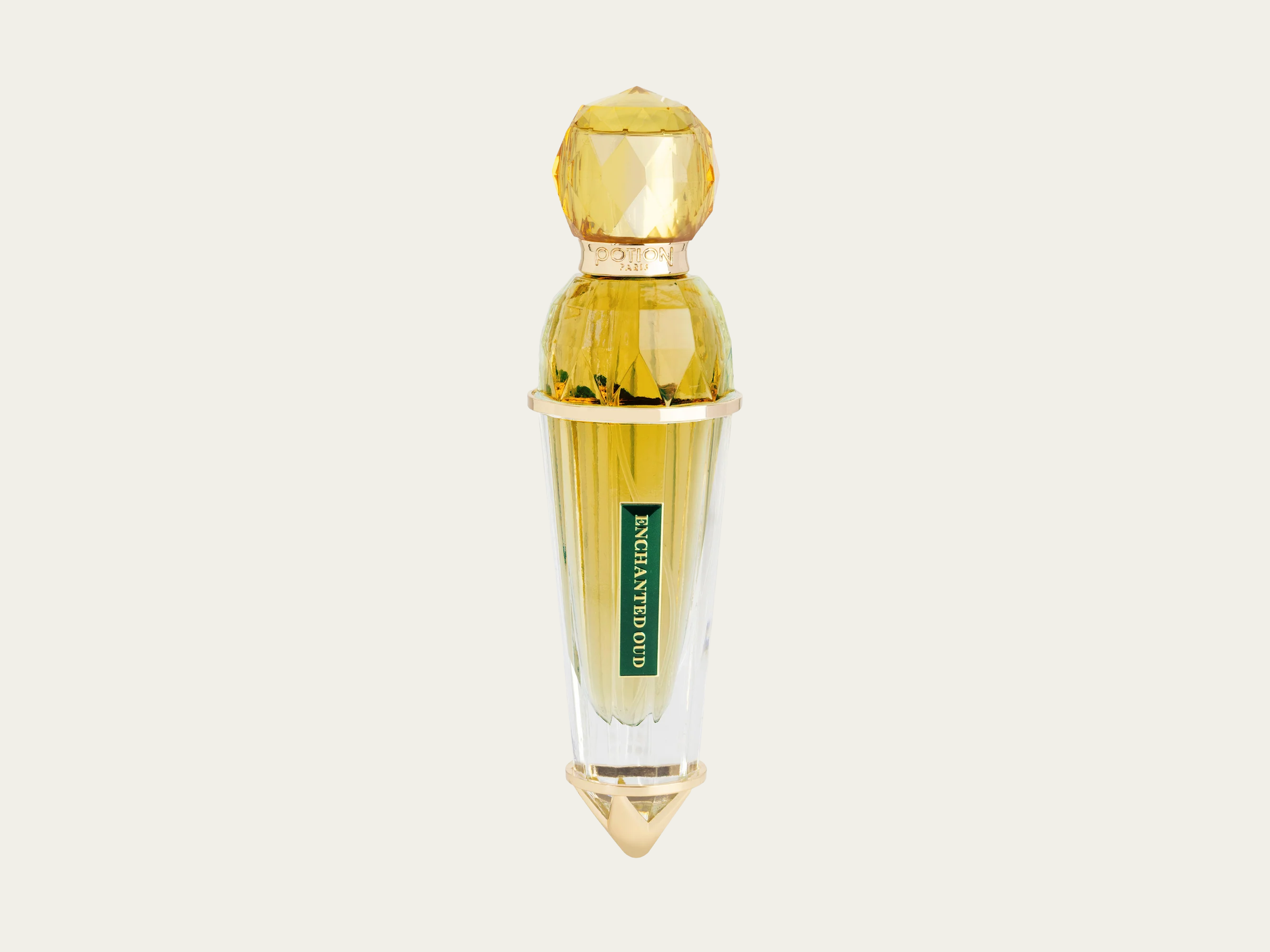
Potion Paris's Enchanted Oud exemplifies this beautifully. Built around sustainably sourced oud and tempered with rose and soft spices, it is precisely the kind of composition that reveals new facets with every wear throughout the colder months.
Amber: Liquid Warmth
The amber family — built from combinations of labdanum, benzoin, vanilla, and warm resins — creates what perfumers call an "amber accord." This golden, enveloping warmth is winter's most reliable ally in fragrance.
Amber notes sit close to the skin and radiate gentle warmth for hours. They create what is often described as a "scent cocoon" — a personal cloud of warmth that moves with you through cold streets and heated interiors alike.
Royal Amber from Potion Paris takes this principle and elevates it with frankincense and precious woods. The effect is warmth with gravitas — opulent without ever tipping into sweetness.
Rose: Winter's Most Underrated Ingredient
Rose in winter may sound counterintuitive. Most people associate rose fragrances with spring gardens and light summer evenings. But rose absolute — the deep, honeyed, almost jammy extraction — is an entirely different proposition from fresh rose otto.
In cold weather, rose absolute gains a velvety darkness that pairs exquisitely with oud, saffron, and dark woods. This is not your grandmother's rose water. This is rose as a statement ingredient — complex, slightly decadent, and impossible to ignore.
Rose de Nuit captures this winter-rose spirit perfectly: a deep, mysterious rose wrapped in dark florals and warm base notes that lingers on scarves and wool coats for hours.
Spices and Incense: The Supporting Cast
Saffron, cardamom, cinnamon, clove, and frankincense all perform brilliantly in the cold. These ingredients add texture and movement to winter fragrances — they create that sense of warmth radiating from within rather than sitting passively on the surface.
Incense notes, particularly frankincense and myrrh, bring a contemplative, almost architectural quality to cold-weather scents. They create structure and lift that prevents richer compositions from feeling flat or one-dimensional.
How to Wear Fragrance in Winter: Application Techniques That Matter
Winter fragrance application differs meaningfully from warmer months. Understanding these differences will transform your scent experience.
Apply to Warm, Moisturised Skin
Cold, dry skin is the enemy of fragrance longevity. Central heating and cold wind strip moisture, and dry skin cannot hold scent molecules effectively. Always apply fragrance to freshly moisturised skin — an unscented body oil or balm provides the ideal canvas.
Focus on pulse points where warmth naturally radiates: the inner wrists, the base of the throat, and behind the ears. In winter, also consider applying to the chest and inner elbows, where clothing traps warmth and creates a personal diffusion zone.
Layer Strategically
Fragrance layering is particularly rewarding in winter. The concept is simple: use complementary scents on different body areas to create depth and complexity that a single fragrance cannot achieve alone.
A practical winter layering approach: apply a richer oud or amber fragrance to the torso and chest, where it will develop slowly beneath clothing, and a slightly lighter composition to the wrists and neck where it will interact directly with cold air.
Use More Than You Think You Need
Cold air reduces projection significantly. A fragrance that radiates a metre in summer might project only thirty centimetres in winter. This is not a flaw — it is an invitation to be slightly more generous with application.
Three to four sprays in summer might become five to six in winter. The scent will still feel intimate and personal rather than overwhelming, because the cold air keeps it close. This is one of the genuine pleasures of winter fragrance: you can wear richer, more complex scents in greater amounts without the risk of overwhelming those around you.
Spray on Fabric (Selectively)
Wool scarves, cashmere jumpers, and coat collars hold fragrance beautifully and release it slowly throughout the day. Spraying fragrance on textiles extends longevity dramatically — often to eight or ten hours or more.
A note of caution: always test on an inconspicuous area first, as some fragrance ingredients can stain lighter fabrics. Dark wool and cashmere are generally safe.
Building Your Winter Fragrance Wardrobe
A well-considered fragrance wardrobe for winter does not require dozens of bottles. Three to four carefully chosen compositions will cover every occasion from casual weekends to formal evenings.
The Everyday Warm Scent
This is your reliable daily companion — warm enough to feel appropriate for winter but not so intense that it demands attention in every room you enter. Look for soft ambers, gentle woods, and clean musks with a touch of spice. This is your office-to-evening transition scent.
The Statement Oud
Every winter wardrobe needs at least one oud-based fragrance. This is for the evenings, the dinners, the moments when you want your scent to be part of the conversation. Enchanted Oud is precisely this: complex enough to captivate, refined enough to wear to a Michelin-starred restaurant.
The Dark Floral
A deep rose, tuberose, or iris composition provides an alternative to purely woody or resinous choices. Rose de Nuit fills this role beautifully — romantic without being precious, dark without being sombre.
The Weekend Comfort Scent
Something softer, sweeter, more personal. Vanilla-touched ambers, sandalwood, and tonka bean create the olfactory equivalent of your favourite blanket. This is for lazy Sundays, bookshops, and fireside conversations.
The Science Behind Winter Fragrance Performance
Understanding fragrance longevity in winter requires a brief look at the chemistry involved.
Fragrance performance depends on two factors: volatility (how quickly molecules evaporate from skin) and sillage (how far the scent projects into the surrounding air). Both are directly influenced by temperature and humidity.
In cold, dry conditions, top notes — the lighter citrus and herbal ingredients that create a fragrance's first impression — evaporate more slowly. This means the opening phase lasts longer, but projects less. Heart and base notes, which are composed of heavier molecules, are affected even more dramatically. They cling to the skin, develop slowly, and can last well into the following day.
This is why understanding fragrance notes matters so much in winter. A perfume with a strong base note foundation — oud, amber, sandalwood, musk, vetiver — will reward you with extraordinary longevity in the cold. A fragrance built primarily around fresh top notes will feel like it has disappeared within an hour.
The concentration of your fragrance matters too. Eau de parfum and pure parfum concentrations perform significantly better in winter than eau de toilette, simply because they contain a higher proportion of those heavier, more persistent base molecules.
Transitioning Between Seasons: The Autumn Bridge
The shift from summer to winter fragrance need not be abrupt. Autumn provides a natural bridge — a period where lighter oriental compositions, soft spiced florals, and gentle woody scents feel perfectly appropriate.
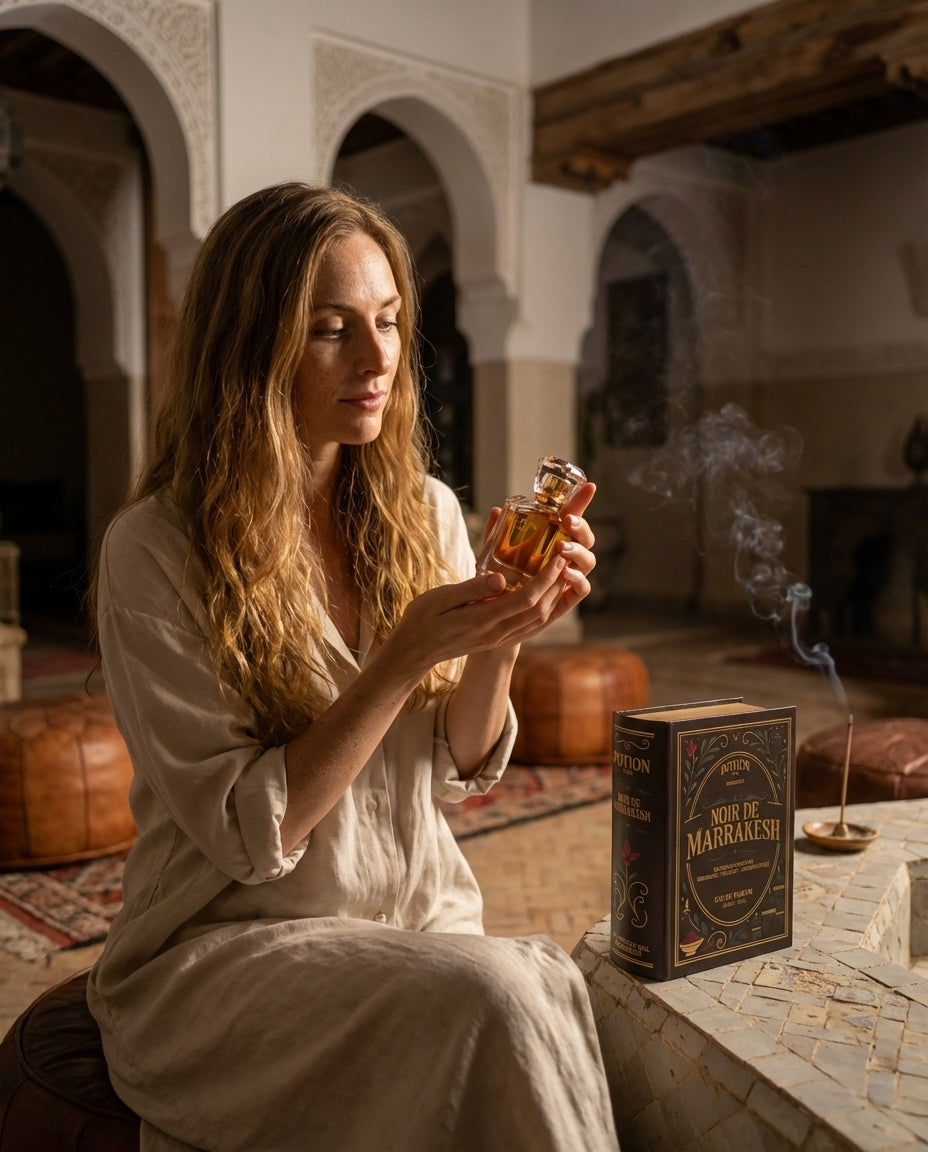
Noir de Marrakesh is an exceptional transitional fragrance. Its blend of dark spices and warm woods carries enough depth for cooler evenings without the full intensity of a dedicated winter scent. It works from early October through to late February with equal elegance.
Similarly, Zahara — with its golden spice and exotic warmth — bridges the gap between the lighter fragrances of summer and the deeper compositions of deep winter.
Caring for Your Fragrance Collection in Winter
Cold weather itself does not harm fragrance, but the rapid temperature fluctuations common in winter — moving between freezing outdoor conditions and centrally heated interiors — can accelerate degradation.
Store your collection away from direct heat sources. Radiators, heated bathroom shelves, and windowsills that catch winter sun are all problematic. A cool, dark drawer or wardrobe shelf is ideal.
The Crystal Vial design used by Potion Paris offers a practical advantage here: the refillable system means you keep a smaller quantity in active use while the main supply remains sealed and protected. It is sustainability and preservation working together.
Winter Fragrance for Every Occasion
The beauty of building a considered cold-weather fragrance wardrobe is that you always have the right scent for the moment. A few guidelines:
- Work and daytime: Soft amber, light woods, clean musk. Warm but not distracting. Royal Amber worn lightly is ideal.
- Evening and social: Oud, deep rose, rich spices. This is where Enchanted Oud and Rose de Nuit truly shine.
- Date night: Something with sillage and personality. You want to be remembered. Noir de Marrakesh's mysterious depth is magnetic.
- Weekends: Comfort scents — vanilla-touched ambers, sandalwood, Zahara's golden warmth.
- Formal events: Confident, distinctive compositions that announce presence without shouting.
Frequently Asked Questions
Should I wear different perfume in winter than in summer?
Yes, and the difference matters more than most people realise. Cold air reduces fragrance projection and slows evaporation, which means lighter summer scents can seem to disappear entirely. Winter rewards richer, warmer compositions — oud, amber, deep rose, spices, and resins — that have the molecular weight to perform in lower temperatures. Think of it as dressing your skin for the season, just as you would dress your body. The right winter fragrance does not just survive the cold; it thrives in it.
How many sprays of perfume should I use in winter?
Generally, you can add one to three additional sprays compared to your summer application. Cold air keeps fragrance closer to the skin, so what might feel like too much in July will feel perfectly balanced in December. Five to six sprays of an eau de parfum is a comfortable winter application for most people. Focus on warm areas of the body — chest, inner wrists, neck, and behind the ears — where your natural body heat will help the fragrance develop and radiate through layers of clothing.
What fragrance notes last longest in cold weather?
Base notes outperform everything else in winter. Oud, amber, sandalwood, vanilla, musk, vetiver, and resins like frankincense and benzoin all have heavy molecular structures that evaporate slowly in cold conditions. These ingredients can last twelve hours or more on skin and even longer on fabric. Top notes (citrus, light herbs) and some heart notes (lighter florals) will fade more quickly. This is why fragrances built around a strong base — like the Potion Paris collection — are particularly well-suited to the colder months.