Eau de Parfum vs Perfume: Understanding Fragrance Concentrations and Why They Matter
You stand before a perfumery counter, two bottles in hand. One says Eau de Parfum. The other simply reads Parfum. The price difference is significant. But what, precisely, are you paying for — and does it genuinely matter?
The distinction between eau de parfum and perfume is one of the most misunderstood concepts in fragrance. It shapes everything from how long your scent lasts to how others experience it — yet most people choose blindly, guided by marketing rather than knowledge.
This guide dismantles the confusion. By the end, you will understand exactly what separates each concentration, why it matters for your skin and your wardrobe, and how to invest wisely in the fragrances that define you.
What Does "Fragrance Concentration" Actually Mean?
Every perfume you have ever worn is, at its core, a precise blend of two things: aromatic compounds (the fragrance oils that create the scent) and a carrier solution (typically ethanol and water). The ratio between these two elements determines the concentration — and concentration is the single most important factor governing a fragrance's behaviour on your skin.
Higher concentrations mean more fragrance oil per millilitre. This translates directly into longevity, sillage (the trail your scent leaves), and depth. Lower concentrations feel lighter, dissipate faster, and project less.
Think of it like tea. The same leaves steeped for two minutes produce something entirely different from those left for ten. The ingredients are identical — the intensity is not.
The Complete Fragrance Concentration Spectrum
The perfume industry uses a well-established hierarchy of concentrations. Understanding this spectrum is essential before comparing any two bottles:
Eau Fraîche (1–3% concentration)
The lightest classification. Eau Fraîche is barely-there fragrance — a whisper that fades within an hour. Often used in body mists and aftershaves, it offers refreshment without commitment. You will rarely encounter this in luxury perfumery.
Eau de Cologne (2–5% concentration)
Traditionally associated with citrus-forward, invigorating compositions, Eau de Cologne lasts roughly two hours. It is the fragrance equivalent of a cold shower — bracing, brief, and best suited to warm weather or post-exercise freshness.
Eau de Toilette (5–15% concentration)
The workhorse of the mainstream fragrance market. EDT offers moderate longevity — typically three to five hours — at accessible price points. Many designer fragrances are formulated at this concentration. The scent is present but not commanding; reapplication is expected and factored into the design.
Eau de Parfum (15–20% concentration)
This is where things become serious. Eau de Parfum — often abbreviated as EDP — represents the sweet spot for most fragrance enthusiasts. With concentration levels between 15 and 20 percent, an EDP typically lasts six to eight hours, projects well without overwhelming, and reveals its full olfactory arc from top notes through to base.
The majority of luxury and niche fragrances are formulated as Eau de Parfum. There is a reason for this: EDP concentration allows perfumers to express complexity. The higher oil content means base notes — the deep, rich foundations of oud, amber, musk, and sandalwood — have space to breathe and evolve. You experience the full story the perfumer intended.
Parfum / Extrait de Parfum (20–40% concentration)
Parfum — also called Extrait de Parfum, Pure Perfume, or simply Perfume — sits at the summit. With concentrations between 20 and 40 percent, these formulations are the purest commercial expression of a fragrance.
Parfum lasts eight to twelve hours or more. Its sillage is intimate but persistent — it stays close to the skin, creating a personal aura rather than announcing itself across a room. The alcohol content is lower, which makes Parfum gentler on sensitive skin and allows the fragrance oils to unfold with remarkable subtlety.
Eau de Parfum vs Perfume: The Real Differences
Now that the spectrum is clear, let us compare the two concentrations that cause the most confusion:
Longevity
Eau de Parfum: 6–8 hours on average. Excellent for a full day or evening, though you may wish to touch up for events spanning twelve hours or more.
Parfum: 8–12+ hours. A single morning application can carry you through an entire day and into the evening without reapplication. The scent evolves slowly, with base notes lingering well into the following day on clothing.
Sillage and Projection
Eau de Parfum: Moderate to strong projection. Others will notice your fragrance within conversational distance, and it leaves a discernible trail as you move through a space.
Parfum: Intimate projection. Parfum is designed to be discovered, not broadcast. It sits closer to the skin, rewarding those who lean in. This makes it particularly suited to romantic settings, private moments, and environments where subtlety is valued.
Price
Eau de Parfum: Typically 20–40% less expensive than the Parfum equivalent from the same house. The lower concentration requires less raw material — and in luxury perfumery, those materials (genuine oud, Bulgarian rose absolute, orris butter) represent the majority of production cost.
Parfum: Premium pricing reflects premium ingredients. However, because Parfum requires less product per application and lasts significantly longer, the cost per wear often rivals or undercuts its EDP counterpart.
Scent Character
This is where the distinction becomes most interesting. The same fragrance name at EDP versus Parfum concentration is not simply "stronger" or "weaker" — it is a fundamentally different olfactory experience.
At EDP concentration, top notes (the initial burst of citrus, spice, or green freshness) are more prominent. The fragrance arc is more dramatic, with clearer transitions between opening, heart, and base.
At Parfum concentration, the composition shifts towards the heart and base. Top notes are softened; the deeper, richer elements dominate from the first moment. The result is warmer, smoother, and often more complex — as though you are hearing an orchestra from the front row rather than the balcony.
Which Concentration Should You Choose?
The answer depends entirely on how you wear fragrance and what you expect from it:
Choose Eau de Parfum if:
- You enjoy fragrances with noticeable projection and a clear scent trail
- You want versatility — EDP works across office, social, and evening contexts
- You appreciate the full arc from top to base notes
- You are building a fragrance wardrobe and want variety at reasonable investment
- You prefer a scent that makes a statement without requiring close proximity
Choose Parfum / Extrait if:
- Longevity is your priority — you want one application to last all day
- You prefer intimate sillage that rewards closeness
- You gravitate towards deep, rich, warm compositions
- You have sensitive skin (lower alcohol content reduces irritation)
- You view fragrance as a personal ritual rather than a social signal
The Potion Paris Approach: EDP That Performs Like Parfum
At Potion Paris, our entire collection is formulated as Eau de Parfum at the upper threshold of the EDP range. This is a deliberate choice.
We believe EDP concentration offers the ideal balance: the projection and versatility that modern life demands, combined with the depth and longevity that luxury commands. Our Enchanted Oud, for example, delivers eight hours of rich, evolving oud complexity — from its spiced saffron opening through to its deep amber and sandalwood foundation.
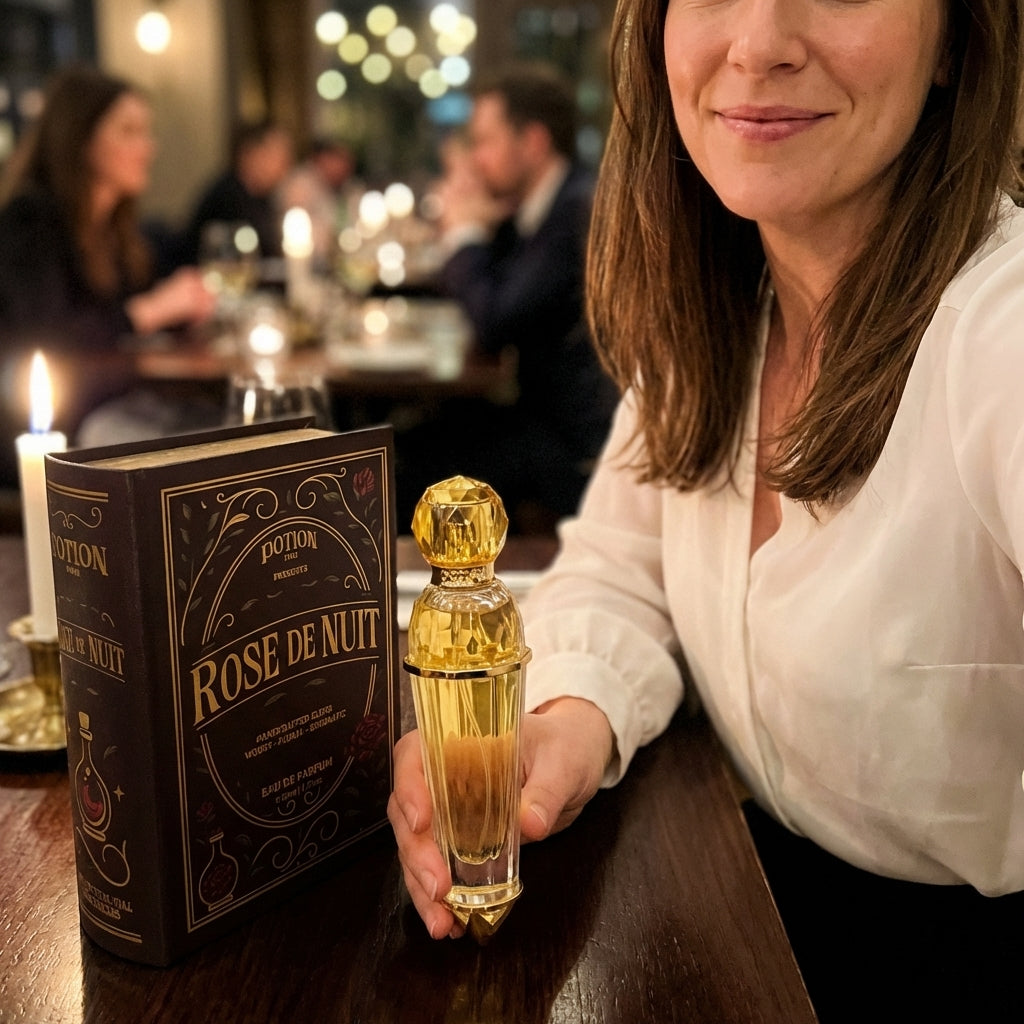
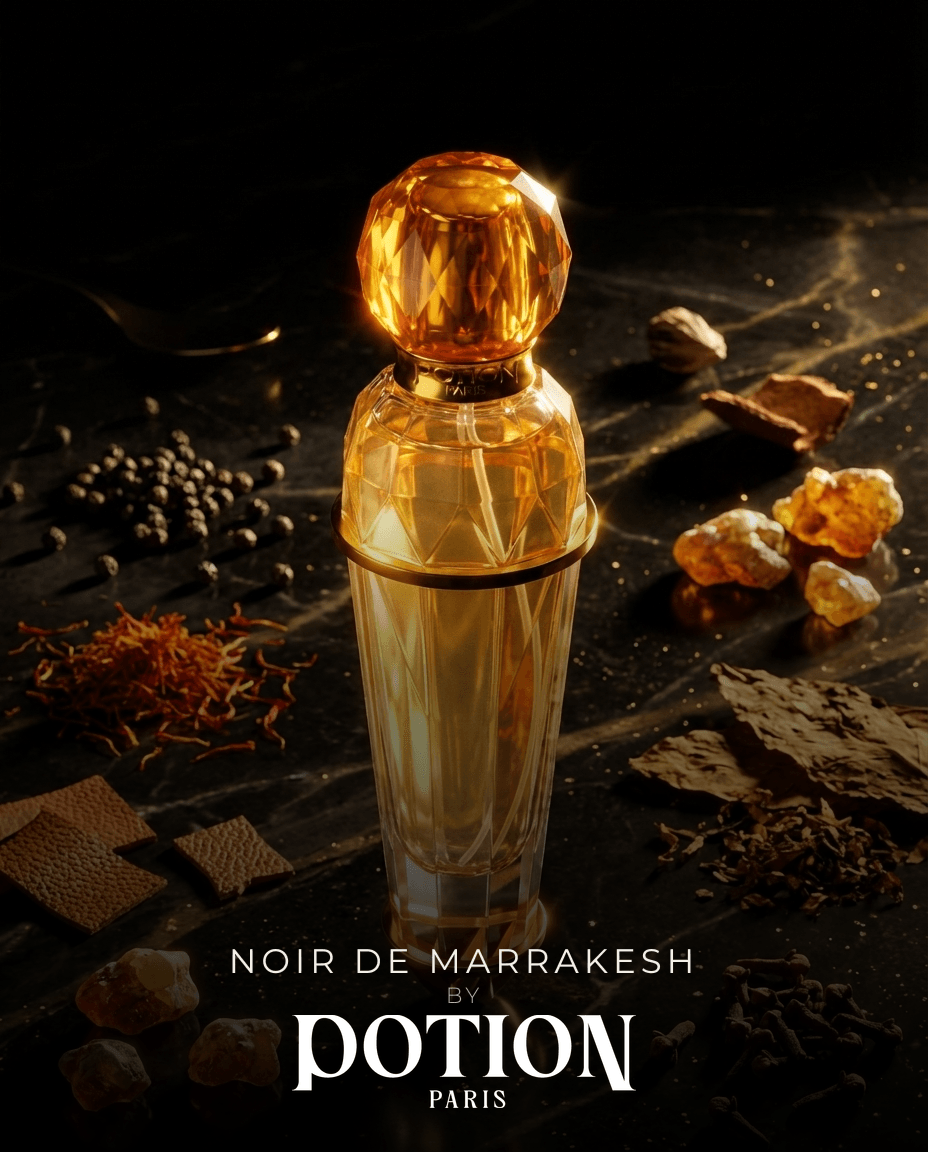
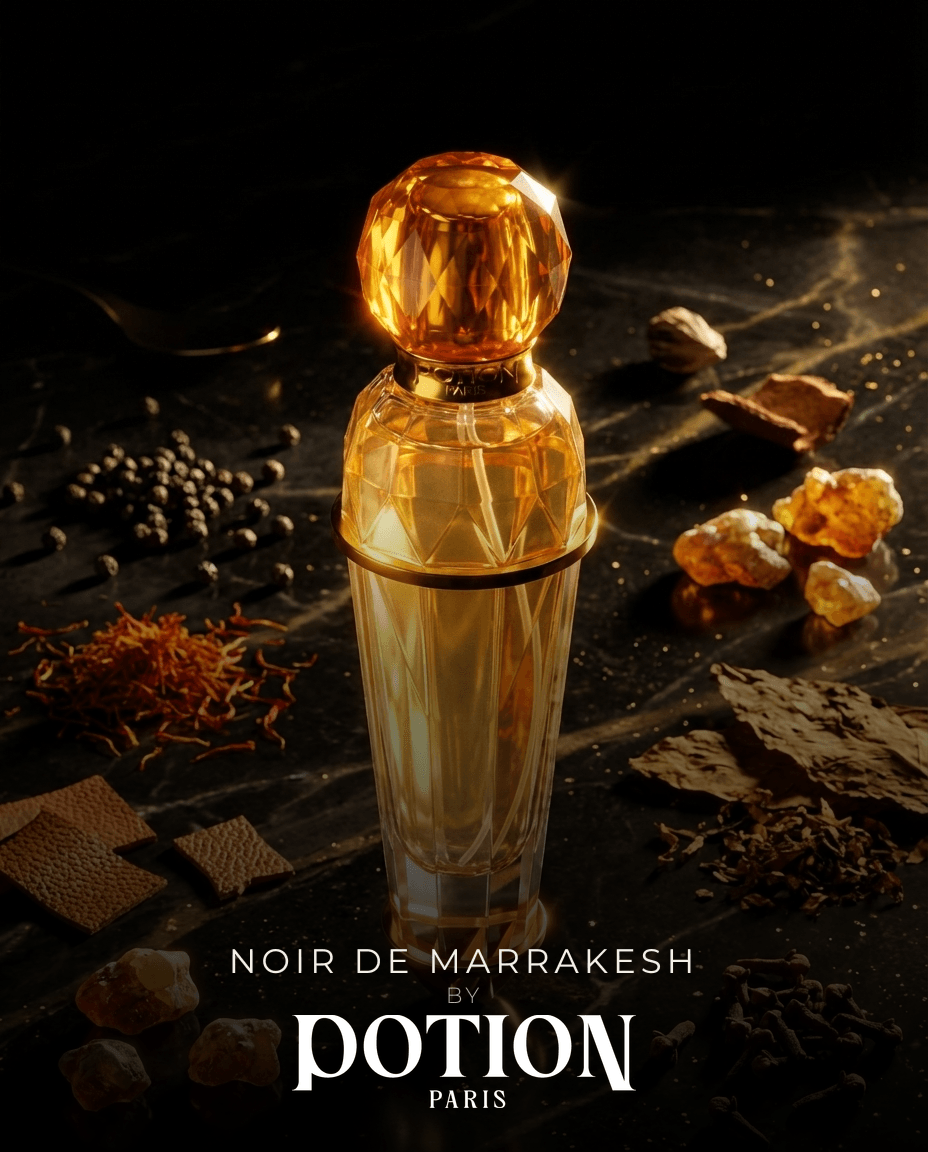
Every fragrance is housed in our signature Crystal Vial — a refillable 50ml vessel with a hand-finished crystal cap and gold display stand. The refillable design means you invest in the scent, not the packaging. When your vial runs low, you simply order a refill rather than repurchasing an entirely new bottle.
This approach aligns with our conviction that luxury should be sustainable. A refillable Crystal Vial reduces waste without compromising the experience of owning something genuinely beautiful.
Common Myths About Fragrance Concentration
Before we close, let us address three persistent myths:
Myth: Higher concentration always means better quality.
Not necessarily. A brilliantly composed Eau de Toilette can outperform a mediocre Parfum. Concentration affects intensity and longevity, not the quality of the composition itself. What matters is the skill of the perfumer and the calibre of the ingredients.
Myth: Parfum is "the real perfume" and everything else is diluted.
Every concentration is intentional. Eau de Toilette is not a watered-down Parfum — it is a distinct formulation, often with different proportions of specific notes, optimised for its intended concentration.
Myth: You should always buy the highest concentration available.
Context matters. Parfum concentration in a heavy oud or amber composition might be overwhelming for a summer office environment. Meanwhile, a light citrus composition might benefit from the intensity that Parfum provides. Match the concentration to the fragrance, the season, and the setting.
How to Test Concentration Differences
If you are curious about how concentration changes a fragrance you already love, try this approach:
- Apply to skin, not paper. Blotters are useful for initial impressions, but skin chemistry is where concentration differences truly reveal themselves.
- Wait at least 30 minutes. Top notes dissipate quickly at any concentration. The meaningful differences emerge in the heart and base.
- Compare at the same time of day. Skin temperature, hydration, and pH fluctuate throughout the day, which affects how fragrance develops.
- Note the six-hour mark. This is where EDP and Parfum diverge most dramatically. By hour six, an EDP may be fading to a skin scent while a Parfum continues to project.
Building your fragrance knowledge through deliberate comparison is one of the most rewarding aspects of the hobby — and it ensures every purchase is informed, intentional, and suited to your life.
Frequently Asked Questions
Is Eau de Parfum the same as perfume?
No. Eau de Parfum (EDP) typically contains 15–20% fragrance oil concentration, while Perfume (Parfum or Extrait de Parfum) contains 20–40%. Parfum lasts longer, sits closer to the skin, and often has a richer, deeper character. However, EDP offers stronger projection and a more dynamic scent arc, making it the preferred choice for many luxury houses — including Potion Paris.
Why is Parfum more expensive than Eau de Parfum?
Parfum uses a higher proportion of fragrance oils, and in quality perfumery, these raw materials are the primary cost driver. Ingredients like genuine oud, Bulgarian rose absolute, and natural ambergris are extraordinarily expensive. More oil per millilitre means higher production costs. However, because Parfum requires less product per application and lasts longer, the cost per wear can be comparable to EDP.
Which fragrance concentration is best for sensitive skin?
Parfum is generally the gentlest option for sensitive skin because it contains less alcohol than lighter concentrations. The higher ratio of fragrance oils to ethanol reduces the drying and irritating effects that alcohol can cause. If you experience redness or discomfort from EDP formulations, consider trying the same fragrance — or a similar composition — at Parfum concentration. Applying to well-moisturised skin also creates a protective barrier that minimises sensitivity.
Understanding what you are wearing — and why — transforms fragrance from a purchase into a practice. Whether you choose Eau de Parfum for its versatility or Parfum for its intimacy, the knowledge you carry makes every application more intentional, more personal, and more rewarding.
Explore the Potion Paris collection — Eau de Parfum formulated at the threshold of luxury, housed in refillable Crystal Vials designed to last a lifetime.