Eco-Friendly Perfume Brands: The Houses Proving Luxury and Sustainability Are Not Opposites
The fragrance industry produces over 120 million perfume bottles each year. Most end up in landfill within twelve months. But a quiet revolution is reshaping luxury perfume — and the houses leading it prove that choosing sustainability does not mean settling for less.
If you have ever stood at a fragrance counter and wondered whether your perfume habit is costing the planet, you are asking the right question. The good news? A growing number of eco-friendly perfume brands are answering it with extraordinary creativity, proving that the most beautiful scents can also be the most responsible.
Why Eco-Friendly Perfume Matters More Than You Think
Fragrance sits at the intersection of chemistry, art, and consumer culture. It is also, historically, one of beauty's least transparent sectors. From petroleum-derived synthetic musks to single-use glass packaging wrapped in layers of unnecessary cardboard, the environmental footprint of a typical perfume bottle is far larger than most people realise.
Consider the journey of a single conventional fragrance: raw materials sourced with little traceability, synthetic compounds manufactured in chemical plants, assembled into heavy glass with a non-recyclable spray mechanism, boxed in printed cardboard with a cellophane overwrap. Once the 50ml or 100ml inside is finished, the entire package — cap, glass, mechanism, box — typically goes to waste.
Multiply that by the billions of fragrance units sold globally each year, and the scale of the problem becomes clear.
Eco-friendly perfume brands challenge every stage of this chain. They ask: what if the bottle was designed to be kept forever? What if the ingredients were traceable, responsibly harvested, and genuinely natural? What if luxury meant less waste, not more?
What Makes a Perfume Brand Truly Eco-Friendly?
The term 'eco-friendly' is used liberally in beauty marketing, which makes it essential to understand what genuinely sustainable fragrance looks like versus what amounts to greenwashing.
1. Refillable Packaging Systems
This is the single most impactful change a fragrance house can make. A beautifully designed bottle that is intended to be refilled — not discarded — fundamentally changes the relationship between consumer and product. Instead of buying a new bottle every few months, you invest in a vessel once and simply replenish the juice.
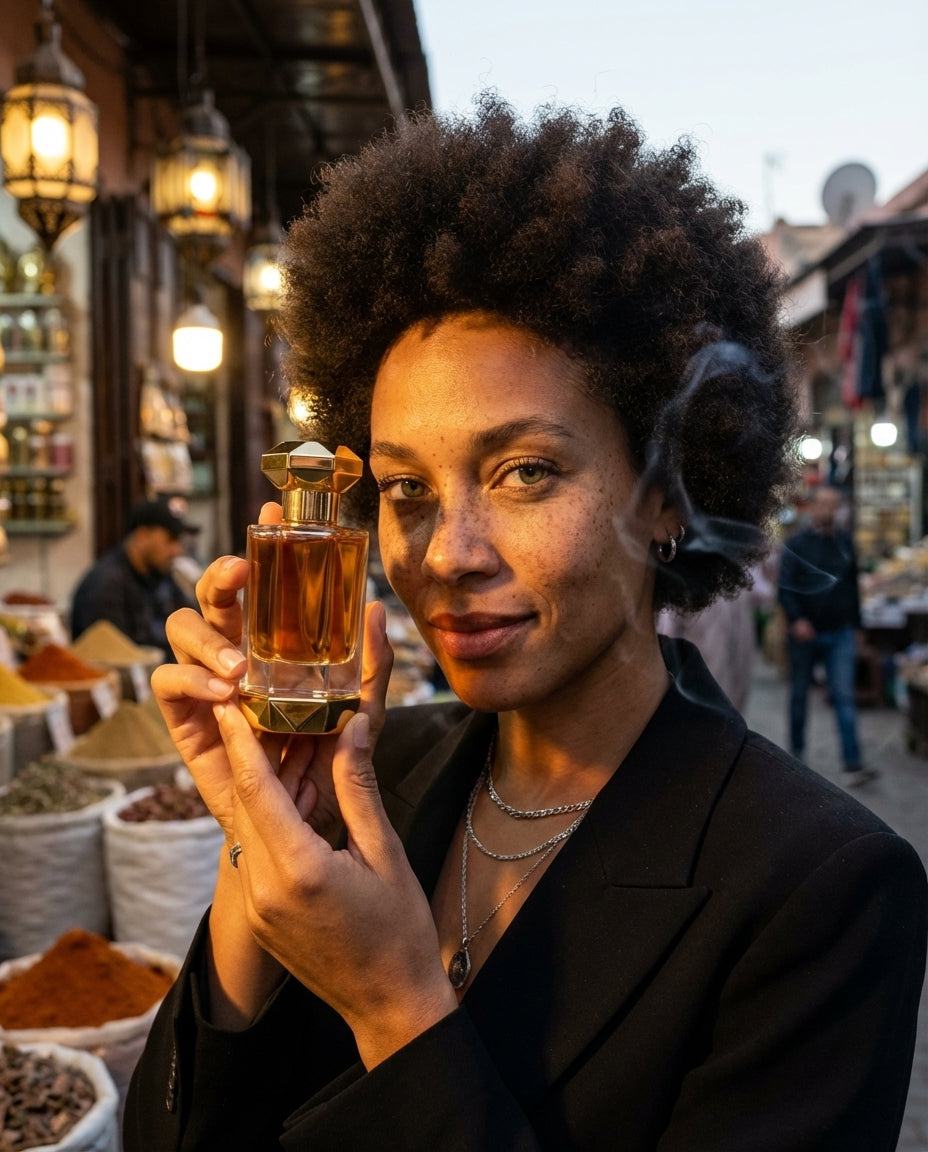
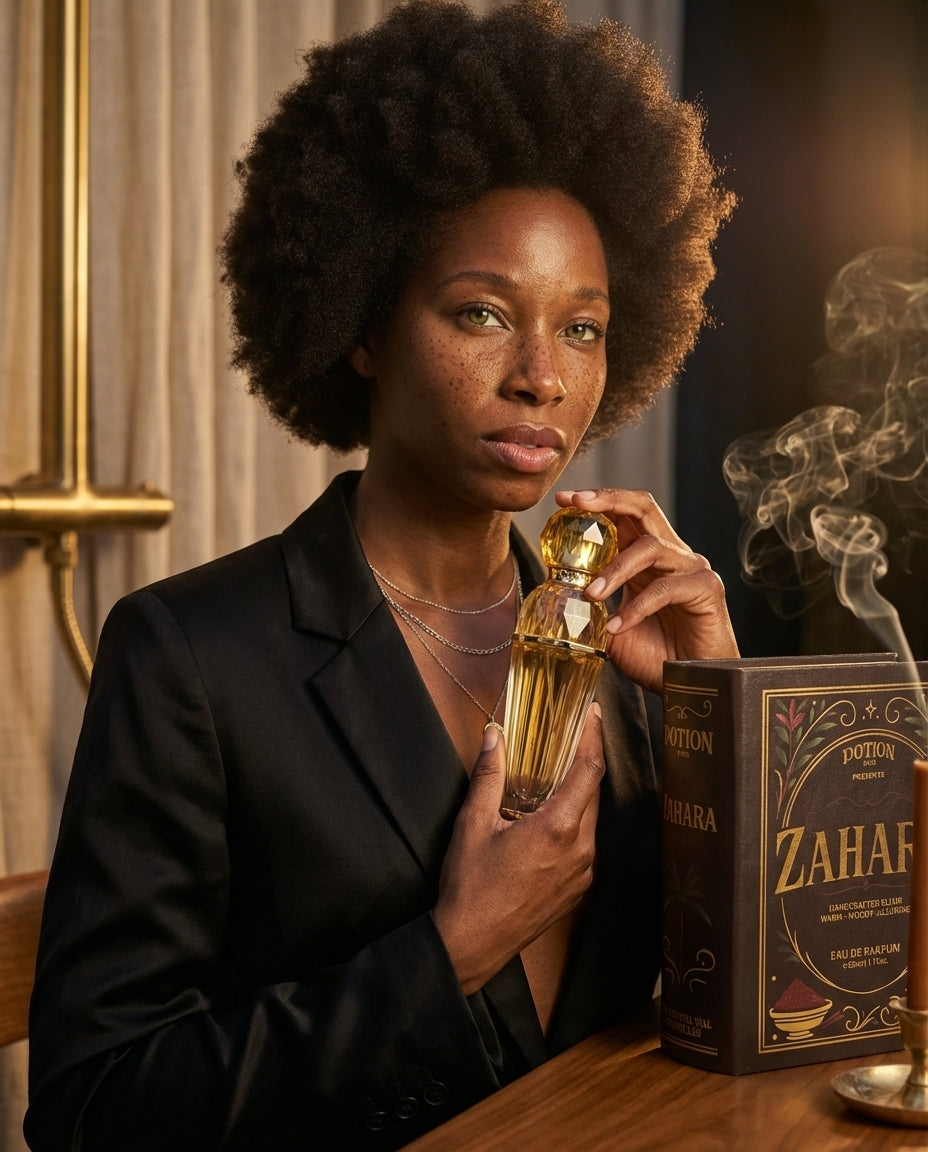
The best refillable systems treat the bottle as an object worth keeping. Potion Paris, for instance, designs its Crystal Vial as a genuine luxury object — a refillable 50ml vessel with a crystal cap and gold stand that belongs on a dressing table permanently, not in a recycling bin. The refill model means less glass, less packaging waste, and a far smaller carbon footprint per millilitre of fragrance worn.
2. Natural and Responsibly Sourced Ingredients
Truly eco-conscious fragrance houses prioritise natural ingredients with traceable supply chains. This means knowing where the rose absolute was harvested, how the oud was sourced, and whether the sandalwood comes from sustainable plantations rather than endangered wild trees.
This is not about being anti-synthetic — some synthetic molecules are actually more sustainable than their natural equivalents. It is about transparency and intentionality. The best brands are honest about what goes into their formulations and why.
3. Minimal and Considered Packaging
Sustainable perfume packaging goes beyond swapping plastic for cardboard. It means questioning whether every element of the packaging is necessary. Does a perfume need three layers of boxing? Does the cap need to be a different material from the bottle? Can the packaging be fully recyclable or, better still, eliminated altogether through refill systems?
4. Cruelty-Free and Vegan Formulations
While most modern perfumery has moved away from animal-derived ingredients like natural musk and ambergris, genuinely eco-friendly brands are transparent about their cruelty-free status and avoid animal testing at every stage of development.
5. Carbon-Conscious Operations
The most committed brands look beyond the bottle to their entire operational footprint — manufacturing processes, shipping methods, office energy use, and supply chain logistics.
The Best Eco-Friendly Perfume Brands Worth Knowing
The landscape of sustainable luxury fragrance is growing rapidly. Here are the houses making the most compelling case that eco-conscious perfume can be extraordinary.
Potion Paris — Refillable Luxury, Redefined
Potion Paris approaches sustainability through design rather than compromise. The house's signature Crystal Vial is engineered for permanence — a refillable vessel with a hand-finished crystal cap and gold display stand that transforms a functional perfume bottle into a decorative object.
The philosophy is elegant in its simplicity: if you make something beautiful enough to keep forever, people will keep it forever. No waste. No guilt. No sacrifice in the luxury experience.
The fragrances themselves use high concentrations of natural ingredients — from the rich oud in Enchanted Oud to the delicate rose absolute in Rose de Nuit — delivering the depth and longevity that conscious consumers should never have to sacrifice.
The house also offers the Potion Pendant, a portable fragrance accessory using refillable 3ml capsules — another innovation that eliminates single-use packaging entirely.
Abel — Transparency as a Foundation
New Zealand-born, Amsterdam-based Abel has built its entire identity around radical transparency. Every ingredient in every fragrance is listed publicly, with sourcing details available on their website. Their formulations use 100% natural ingredients, and their packaging is designed for minimal environmental impact.
Floral Street — Accessible Conscious Fragrance
London-based Floral Street has made sustainability accessible without dumbing down the product. Their fragrances come in patented pulp packaging (made from recycled materials), they are vegan and cruelty-free, and they actively work to reduce their carbon footprint across operations. Their scents are vibrant and contemporary — proof that green credentials need not mean muted creativity.
Maison Louis Marie — Botanical Precision
Inspired by the botanical gardens of Louis Marie de Noailles, this house creates fragrances from plant-based ingredients with meticulous attention to sourcing. Their packaging is clean and minimal, their formulations are vegan, and their approach to scent is rooted in a genuine love of the natural world.
Clean Reserve — The Mainstream Pioneer
Clean Reserve helped bring the concept of sustainable fragrance to a wider audience. Their fragrances are formulated without phthalates, parabens, or animal-derived ingredients, and they use recycled materials in their packaging. While more accessible in price point, they have played an important role in normalising the conversation around conscious fragrance.
Ellis Brooklyn — Clean Meets Luxe
Founded by a former beauty editor, Ellis Brooklyn blends clean formulation principles with genuinely sophisticated scent profiles. Their fragrances are Cradle to Cradle certified, use sustainably sourced ingredients, and avoid a long list of controversial chemicals. The result is fragrance that feels indulgent and responsible in equal measure.
How to Identify Greenwashing in Fragrance
As consumer demand for sustainable products grows, so does the temptation for brands to overstate their environmental credentials. Here is what to watch for:
- Vague claims without specifics. Terms like 'natural', 'green', or 'eco' mean nothing without evidence. Look for brands that provide specific details about their sourcing, formulation, and packaging choices.
- Single-issue focus. A brand that uses natural ingredients but ships in excessive, non-recyclable packaging is not genuinely sustainable. Look for holistic approaches.
- No third-party verification. Certifications from recognised bodies (Leaping Bunny, B Corp, Cradle to Cradle) provide independent validation. Self-declared claims carry less weight.
- Sustainability as an afterthought. The most authentic eco-friendly brands build sustainability into their DNA from day one. If a house suddenly launches a 'green line' while continuing wasteful practices elsewhere, approach with healthy scepticism.
Making the Switch: A Practical Guide
Transitioning to eco-friendly fragrances does not need to happen overnight. Here is a sensible approach:
- Finish what you have. The most sustainable thing you can do with an existing perfume is use it, not discard it.
- Invest in refillable. When you next buy, choose a brand with a refill system. The upfront cost may be slightly higher, but the long-term cost per wear — and the environmental saving — is significantly better.
- Read the ingredients. Start paying attention to what is actually in your fragrance. Brands that are transparent about formulation are generally more trustworthy across the board.
- Quality over quantity. One exceptional, sustainably produced fragrance that you love and wear daily is infinitely better — for you and the planet — than a shelf full of impulse purchases gathering dust.
This is where the refillable Crystal Vial from Potion Paris exemplifies a smarter model. You choose your scent — perhaps the warm, golden depth of Royal Amber or the exotic spice of Zahara — invest once in a vessel designed to last, and simply refill when you need more. No new bottle. No new packaging. No waste.
The Future of Sustainable Fragrance
The trajectory is clear: consumers are increasingly unwilling to accept environmental irresponsibility as the price of luxury. The fragrance houses that will thrive in the coming decade are those that treat sustainability not as a marketing angle but as a design principle.
We are already seeing innovation in biotechnology-derived ingredients that replicate rare naturals without environmental damage. Refillable systems are becoming more sophisticated and more beautiful. Transparency is shifting from differentiator to expectation.
The most exciting aspect? The brands leading this change are also producing some of the most compelling fragrances on the market. Sustainability, it turns out, drives creativity. When you cannot rely on excessive packaging to create perceived value, the scent itself has to be extraordinary. And that is better for everyone.
Frequently Asked Questions
Are eco-friendly perfumes as long-lasting as conventional fragrances?
Yes — longevity depends on fragrance concentration and ingredient quality, not whether a brand is sustainable. Many eco-friendly houses use high concentrations of natural ingredients that deliver exceptional performance. Potion Paris fragrances, for example, use rich concentrations of natural essences including oud, rose absolute, and sandalwood that last beautifully throughout the day.
Why are some eco-friendly perfumes more expensive?
Responsibly sourced natural ingredients, refillable packaging systems, and smaller-batch production all cost more than mass-market alternatives. However, when you factor in the refill model — buying only the juice, not an entirely new bottle each time — the cost per wear often works out lower than conventional luxury fragrance.
How can I tell if a perfume brand is genuinely sustainable or just greenwashing?
Look for specifics rather than vague claims. Genuine eco-friendly brands provide detailed information about their ingredient sourcing, packaging materials, and environmental commitments. Third-party certifications (B Corp, Leaping Bunny, Cradle to Cradle) add credibility. Also examine whether sustainability runs through the entire business or appears only in marketing copy. The most trustworthy brands build it into their product design — like using refillable bottles as standard rather than as an optional add-on.