What Is Oud Perfume? The Complete Guide to Liquid Gold

Oud is a dark, resinous wood harvested from Aquilaria trees once they become infected by a specific mould, and it is prized in perfumery for a scent found nowhere else in nature. Genuine oud sells for more than £30,000 a kilogram, which is why perfumers have called it liquid gold for generations.
What Is Oud Perfume? The Complete Guide to Liquid Gold
That price reflects genuine scarcity. Fewer than 2% of wild Aquilaria trees develop the infection that produces oud, and the resin can take decades to mature inside the heartwood before it is worth harvesting at all. What follows covers what oud actually is, what it smells like depending on where it grows, whether the price is justified, and how to wear it if you are trying it for the first time.
By Potion Paris. Last updated: 14 September 2026
How does a diseased tree become the world's most expensive wood?
The infection triggers a defence response. Once fungal spores reach the heartwood of an Aquilaria tree, the tree floods the wound with a dense, aromatic resin to seal it off, and it is this resin, not the wood itself, that becomes oud.
Left undisturbed, the process runs for years, sometimes decades, slowly darkening pale wood into something heavy and fragrant. Cut open, an infected tree looks nothing like the healthy wood around it. Not every infected tree responds the same way, either. Some produce almost nothing worth harvesting, while others yield resin so dense it sinks in water, and that inconsistency is the real reason a kilogram of the best material can cost more than a small car.
Oud is also written as oudh or called agarwood in English, three names for the same Arabic-rooted material. If the spelling has ever tripped you up while comparing prices online, oud vs oudh, explained properly covers exactly that distinction.
What does oud actually smell like?
Oud smells woody, smoky and faintly sweet, with a resinous depth that keeps shifting for hours after it is applied. No two batches smell quite the same, because the result depends on the tree's origin, its age, and how the resin was extracted.
Picture old, damp woodland after rain, with a thread of incense smoke running underneath it. That is roughly the territory. Oud rarely settles into one note for long. A composition built on Cambodian oud can read honeyed and soft, while one built on Indian oud can read dark and almost leathery, sometimes within the same hour on the same skin.
Does oud smell different depending on where it grows?
Yes, noticeably. Oud is graded and priced by origin because resin from different regions develops a genuinely different character, shaped by climate, soil and the particular fungus involved.
| Origin | Character | Best for |
|---|---|---|
| Cambodian | Sweet, honeyed and gently fruity | Wearing oud for the first time |
| Indian | Intense, animalic and deeply resinous | Wanting maximum depth and projection |
| Indonesian | Earthy, green and quietly smoky | A calmer, more meditative oud |
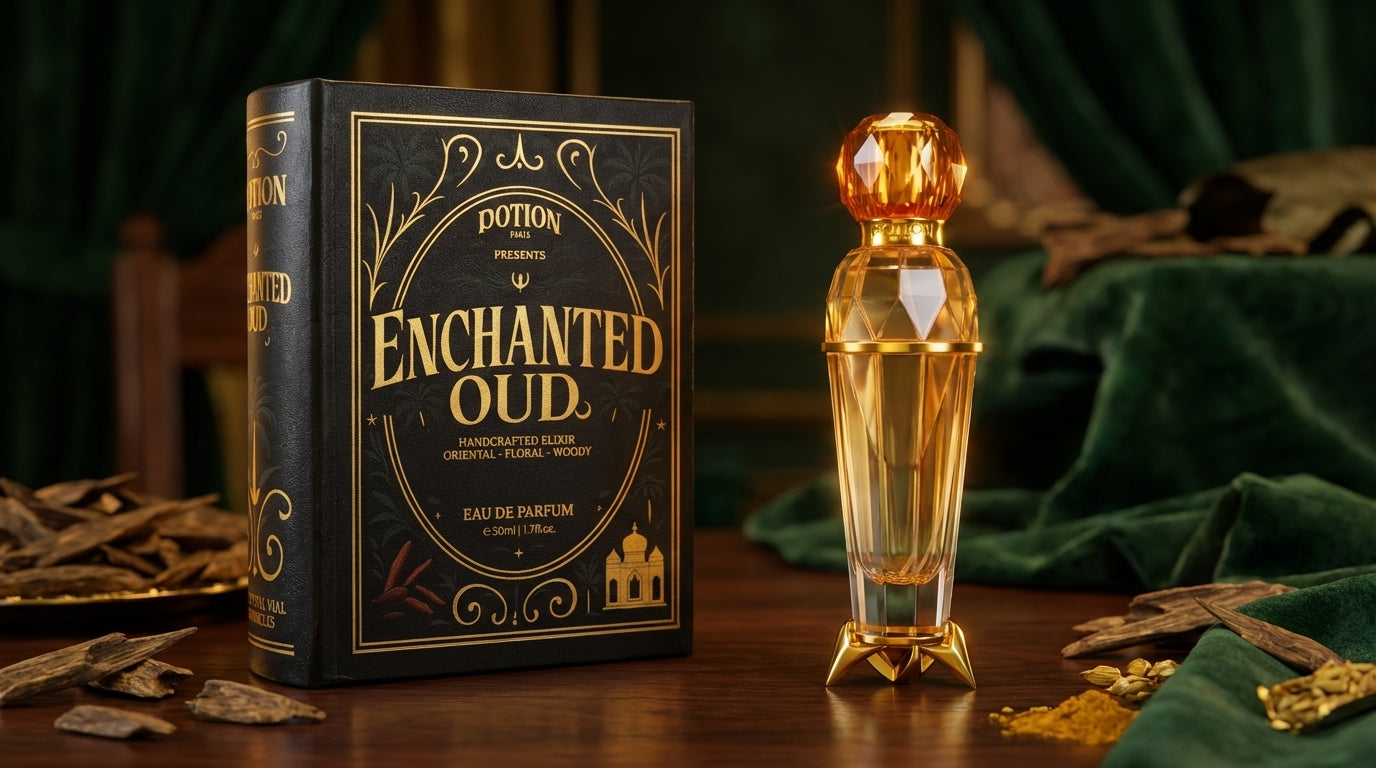
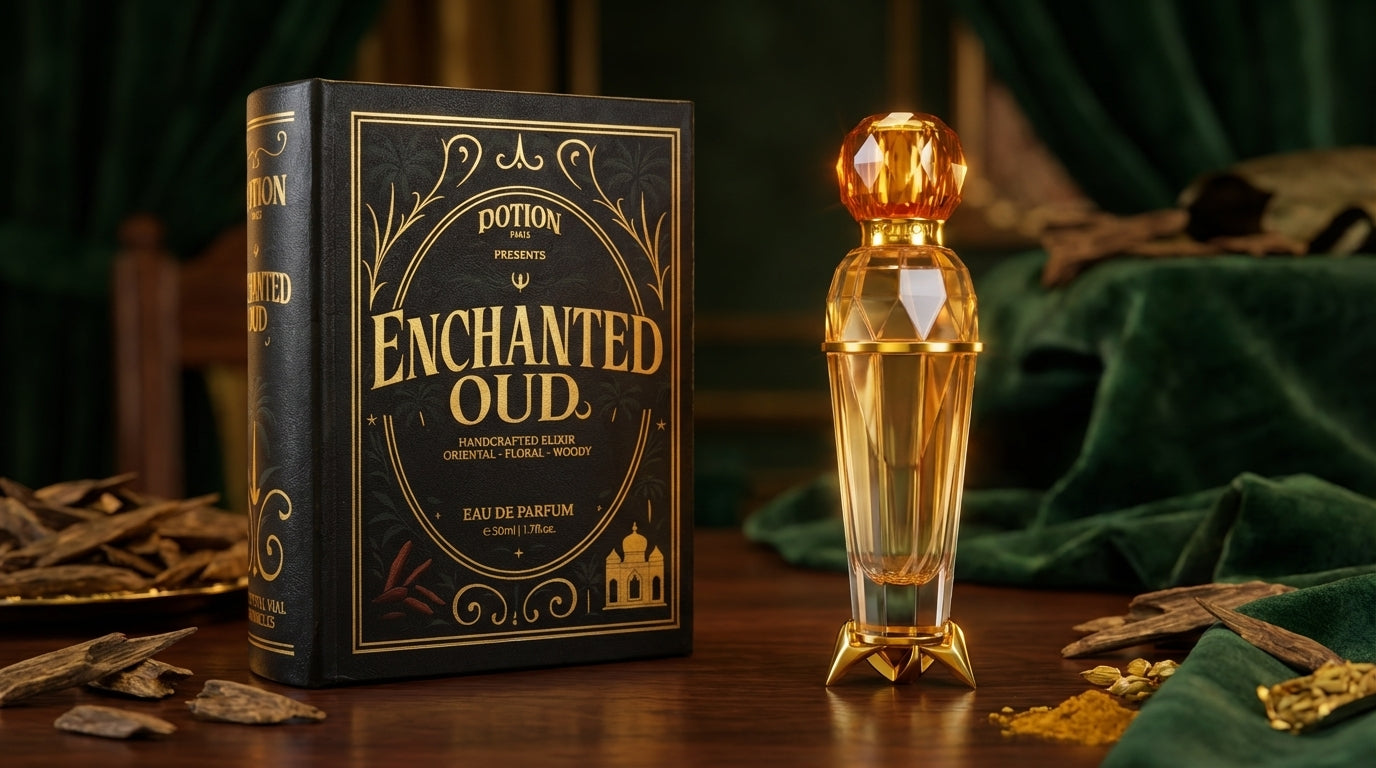
Potion Paris Enchanted Oud is raspberry, ginger, cognac and lychee over rose damas, jasmine and lily of the valley, on oud wood, amber, sandalwood and benzoin, at £165 for 50ml. The oud sits in the base, under the flowers and the fruit, rather than being worn raw.
Is oud perfume made from real oud, or a synthetic version?
Often it is both. Most oud fragrances blend a measured amount of natural agarwood material with laboratory-made "oud accord" molecules that approximate its woody, smoky character at a fraction of the cost. Neither approach is dishonest on its own. The difference matters mainly for how the scent behaves on skin over time.
Natural oud tends to keep changing for hours, moving through leathery, honeyed and balsamic phases as it dries down. A synthetic accord is usually more stable and can settle into a generic woody base within a couple of hours. That is not a flaw. A synthetic-led composition is often easier to live with day to day, while a natural-heavy one rewards patience instead.
Is oud perfume worth the price?
For most people, yes, provided the price reflects the finished fragrance rather than the raw material on its own.
A well-built oud fragrance tends to last considerably longer on skin than a citrus or floral composition, and it develops rather than fading flat, so the real cost per wear is usually lower than the sticker price suggests.
How should you wear oud perfume for the first time?
Start with a blended composition, apply sparingly, and give it time. That covers most of what goes wrong for first-time wearers.
One or two sprays on pulse points is enough. Oud is potent, and it typically needs twenty to thirty minutes before the heart notes settle and the fragrance stops smelling sharp or unfamiliar. Judging an oud fragrance in the first five minutes is the most common mistake new wearers make. Give it longer.
Layering rewards the same patience. The full guide to layering fragrances covers the mechanics of pairing scents without one overpowering the other.
Is oud sourced sustainably?
Responsible producers increasingly cultivate Aquilaria trees on plantations rather than harvesting them from the wild, using controlled inoculation to trigger the same resin response without depleting wild populations, because several wild Aquilaria species are now classified as vulnerable to critically endangered. Sourcing is worth checking before buying oud from anywhere. It rarely takes more than one email to a brand to find out.
Potion Paris sources its agarwood material through suppliers who disclose plantation origin and blends it with synthetic oud accords precisely so that a fragrance's supply never depends on a single wild tree, and reputable houses are usually willing to say so when asked directly.
Which Potion Paris fragrance is the best starting point for oud?
Enchanted Oud is the house's answer, built specifically as an introduction rather than a purist's raw oud. At £165 for 50ml, it wraps oud wood, amber, sandalwood and benzoin in raspberry, ginger, cognac and lychee, with rose damas, jasmine and lily of the valley in between.
Potion Paris' perfumers trained in Grasse, the town in southern France that has been the centre of European perfumery since the eighteenth century, and every fragrance is compounded to IFRA standards, the framework the International Fragrance Association sets for the safe use of perfumery materials. That grounding matters more with oud than with almost any other ingredient, because a poorly balanced oud composition is unpleasant in a way a poorly balanced floral rarely is.
Read the full beginner's guide to oud fragrance for a wider comparison across origins and houses. Some things are precious because they are rare. Oud earned that reputation the hard way, over thousands of years, and it is still earning it.